Äggakaka: A Rustic Southern Swedish Classic
Part oven pancake, part omelette: Skåne's äggakaka, traditionally served with fried pork and lingonberries.
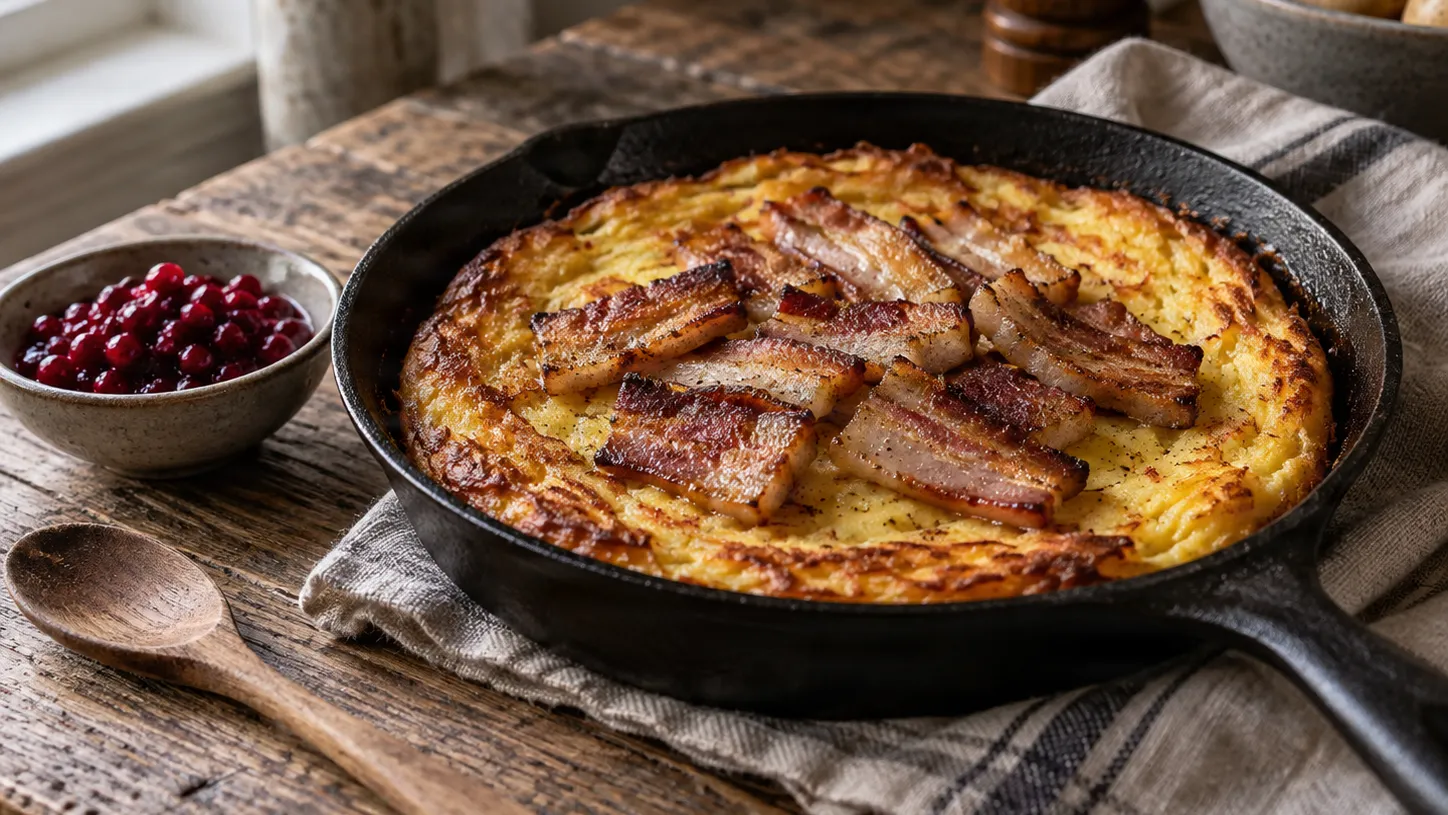
Äggakaka is a traditional dish from the southern region of Skåne, known for its hearty, comforting character and simple preparation. Often described as a cross between an oven pancake and an omelette, äggakaka is rich, fluffy, and golden with a texture that sits somewhere between custard and pancake. Traditionally served with fried pork and lingonberries, it embodies the contrast of sweet, salty, and savory flavors that define much of Swedish home cooking.
Roots in Rural Cooking
Originating from farming communities in Skåne, äggakaka was historically a practical meal that made use of abundant eggs and dairy, especially on small farms that produced their own ingredients. It was a way to create a satisfying dish using simple staples, making it ideal for feeding several people after a long workday.
Unlike many regional specialties that became festive foods, äggakaka has remained a true everyday dish, valued for comfort rather than ceremony.
Key Ingredients and Characteristics
Äggakaka relies on just a few basic ingredients:
- Eggs (often in generous quantities)
- Milk or cream
- Flour
- Salt and a touch of sugar
- Butter for frying
The batter is thicker than typical pancake batter but thinner than an omelette. Once poured into a hot pan, it is cooked slowly to achieve a soft interior while developing a lightly browned surface.
Some cooks flip the entire pancake in the pan for even browning. Others finish it in the oven at around 200°C to ensure a set interior without overcooking the bottom.
The final texture should be:
- Soft and custard-like in the center
- Lightly crisped on the outside
- Rich, buttery, and subtly sweet
Traditional Serving Style
Äggakaka is rarely served on its own. The classic pairing includes:
- Fried salted pork cut into strips and cooked until crisp
- Lingonberry preserves providing a tart contrast
- A small salad or pickled cucumbers for freshness
The dish is typically served warm, around 55 to 65°C, making it ideal for chilly evenings.
In Skåne, it is common to pour some of the pork fat directly over the finished äggakaka, adding depth and additional richness.
Variations Across Households
Though the fundamentals remain consistent, regional households have adapted the dish in personal ways. Some popular variations include:
- Adding chopped onions to the pork topping
- Using smoked pork belly instead of salted pork
- Baking the entire dish in a cast iron pan without flipping
- Reducing the flour for a more egg-focused result
Modern adaptations may swap pork for mushrooms or plant-based toppings while maintaining traditional flavor balance.
A Taste That Endures
Äggakaka remains a beloved comfort food in southern Sweden and is a staple in traditional restaurants across Skåne. It reflects Swedish culinary values: humble ingredients, minimal waste, and flavors built on contrast and simplicity.
Whether served as a hearty dinner or a cozy weekend meal, äggakaka brings the warmth of regional heritage to the table.